- test :
EDITORIAL ARTICLES / AIRPORT DESIGN
The Future of Airport Modernization Starts with Experience
How human-centered design, operational efficiency and long-term flexibility are reshaping the next generation of airports.
North American airports are investing over $45 billion into terminal modernization through 2027, and the early returns suggest it’s working. J.D. Power’s 2025 North American Airport Satisfaction Study shows passenger scores rising 10 points year-over-year, with notable gains in dining, retail, and wayfinding. After decades of treating ‘less bad’ as an acceptable benchmark, the industry is discovering that in an era of elevated consumer expectations, even basic improvements can generate measurable satisfaction gains.
North American airports are often forced into a patchwork approach due to a lack of funding, limited post-pandemic growth, changing passenger profiles, and more. Plus, full-scale terminal renovations can often take years to complete. Fortunately, there is a path forward to positively impact customers, employees, and even the bottom line now — and it begins by improving the airport experience for all.
The Five Modes of Experience
It’s difficult for any industry to maintain a sense of luxury when the experience begins with passengers unloading half their belongings into plastic bins and often ends in a long line to customs. Yet, some notable airports have minimized this functional inconvenience by setting new benchmarks in customer experience by developing nature-themed architecture, interactive digital art, immersive lounge experiences, and more.
While catching up to these global airports may seem out of reach due to business models and customer profiles, the North American aviation industry can benefit by taking lessons and inspiration from those airports finding success closer to home, and by learning from those industries hyper-focused on customer experience, like retail or hospitality.
One proven framework for elevating experience is Gensler’s Experience IndexSM, which measures how design impacts human behavior across five distinct modes: Social, Discovery, Entertainment, Task, and Aspiration. For airports, the Social, Discovery, and Entertainment modes offer the most accessible starting points to improve airports without massive overhauls. These modes deliver tangible benefits that resonate with today’s travelers while building toward longer-term transformations in Task and Aspiration.
Social Mode
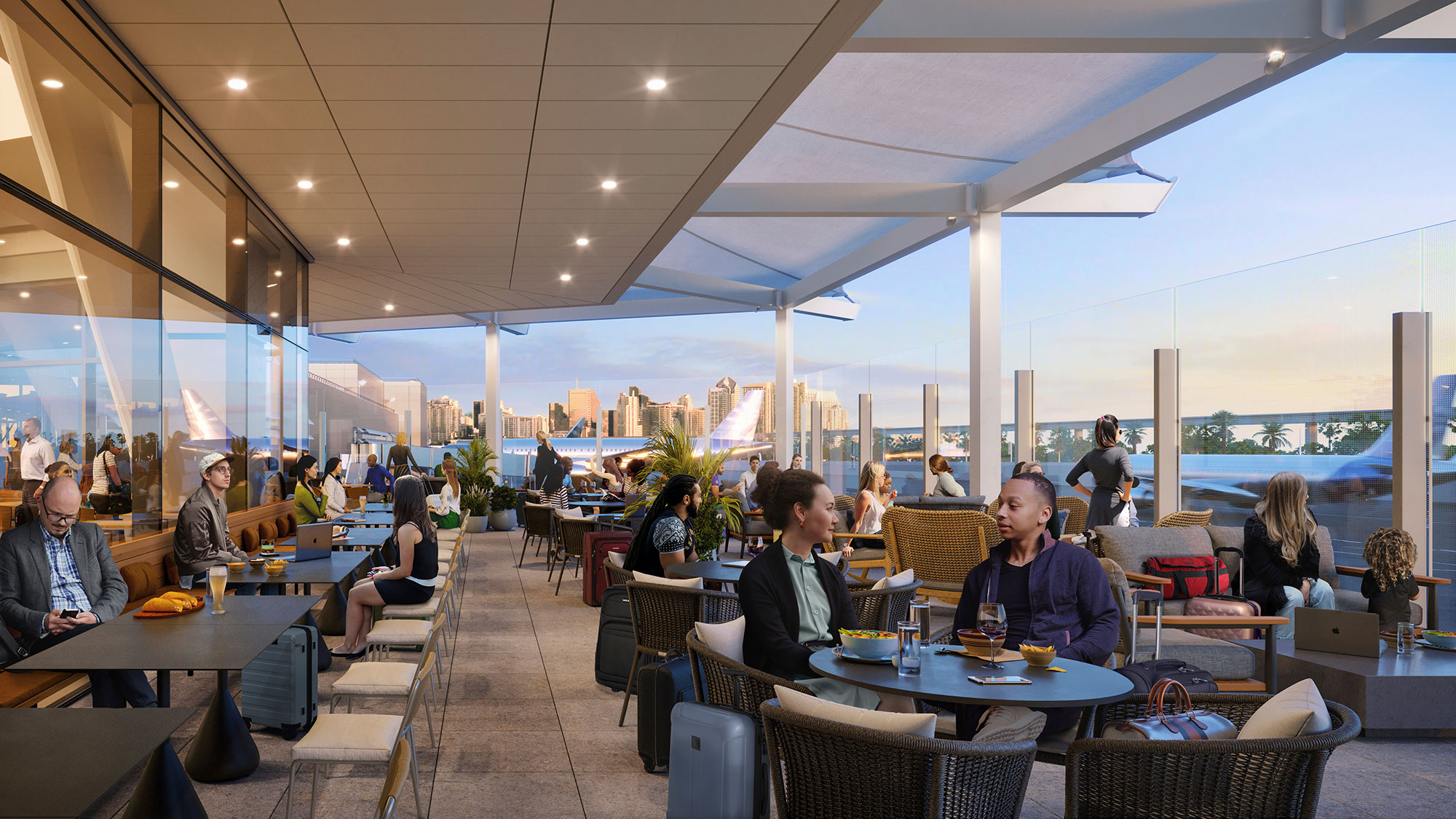
The social mode of experience goes beyond providing people with a dedicated place to socialize; it’s about addressing the diverse needs of today’s travellers. At San Diego International Airport’s new Terminal 1, an outdoor deck and dining terrace offer a relaxing atmosphere to connect, while also providing much-needed space to ease social anxiety and reconnect with nature after clearing security. What’s more, the outdoor deck is accessible to all. For an industry grappling with increasingly aggressive customer behaviour as much as it is its own reputation for heightening class divisions — think first-class seating and exclusive lounges — barrier-less social spaces from drop-off to gate can help ease the sense of division at the airport.
Discovery Mode
At every stage of the journey, airports should invest in keeping customers engaged, including in the “in-between moments.” The discovery mode is not exclusive to those experiencing an airport for the first time. Through beautiful design and immersive art installations, airports can ensure the experience feels new and exciting for first-time travellers and frequent flyers alike.
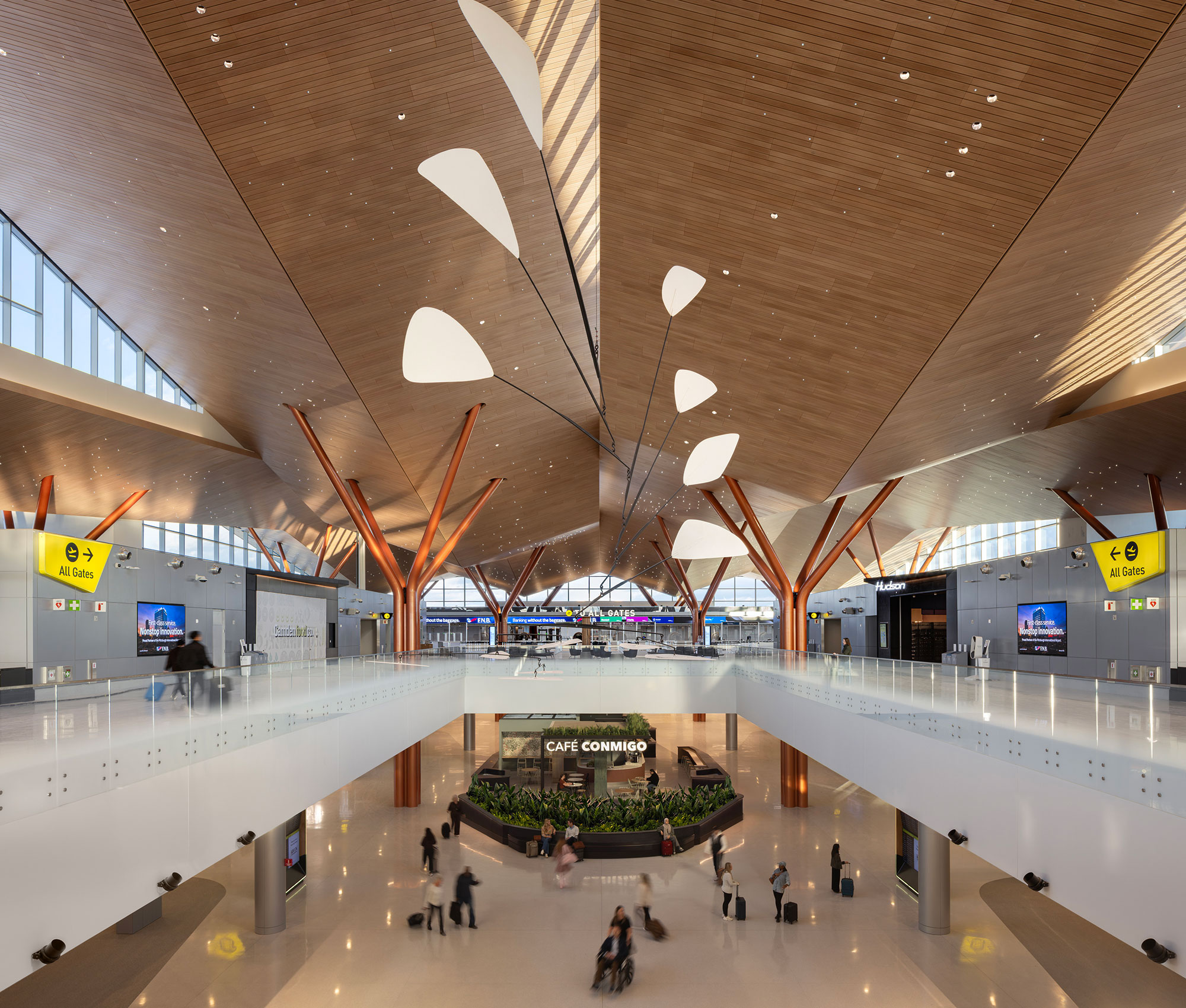
Pittsburgh International Airport’s new terminal is a good example of how design can add to a sense of discovery, while bringing a local flair. The terminal’s undulating roofline evokes Western Pennsylvania’s rolling hills, while tree-like steel columns rise throughout the space. While expansive windows fill the terminal with natural light, four outdoor terraces offer travellers fresh air and native greenery. Inside, art and cultural installations by local artists illustrate Pittsburgh’s story.
For North American airports, digital art can reinforce a sense of identity by reflecting the cities, cultures, and communities they serve. The evolving nature and beauty of digital art installations can significantly impact customer sentiment. According to Gensler’s Experience Index research, users who rated a space’s design as excellent claim their experience to be twice as positive.
Entertainment mode
Experts and airport authorities have long recommended that travellers arrive at the airport early due to long lines and delays, but what if people actually wanted to spend time at the airport? By tapping into the entertainment mode of experience, airports can attract customers earlier and retain them for longer.
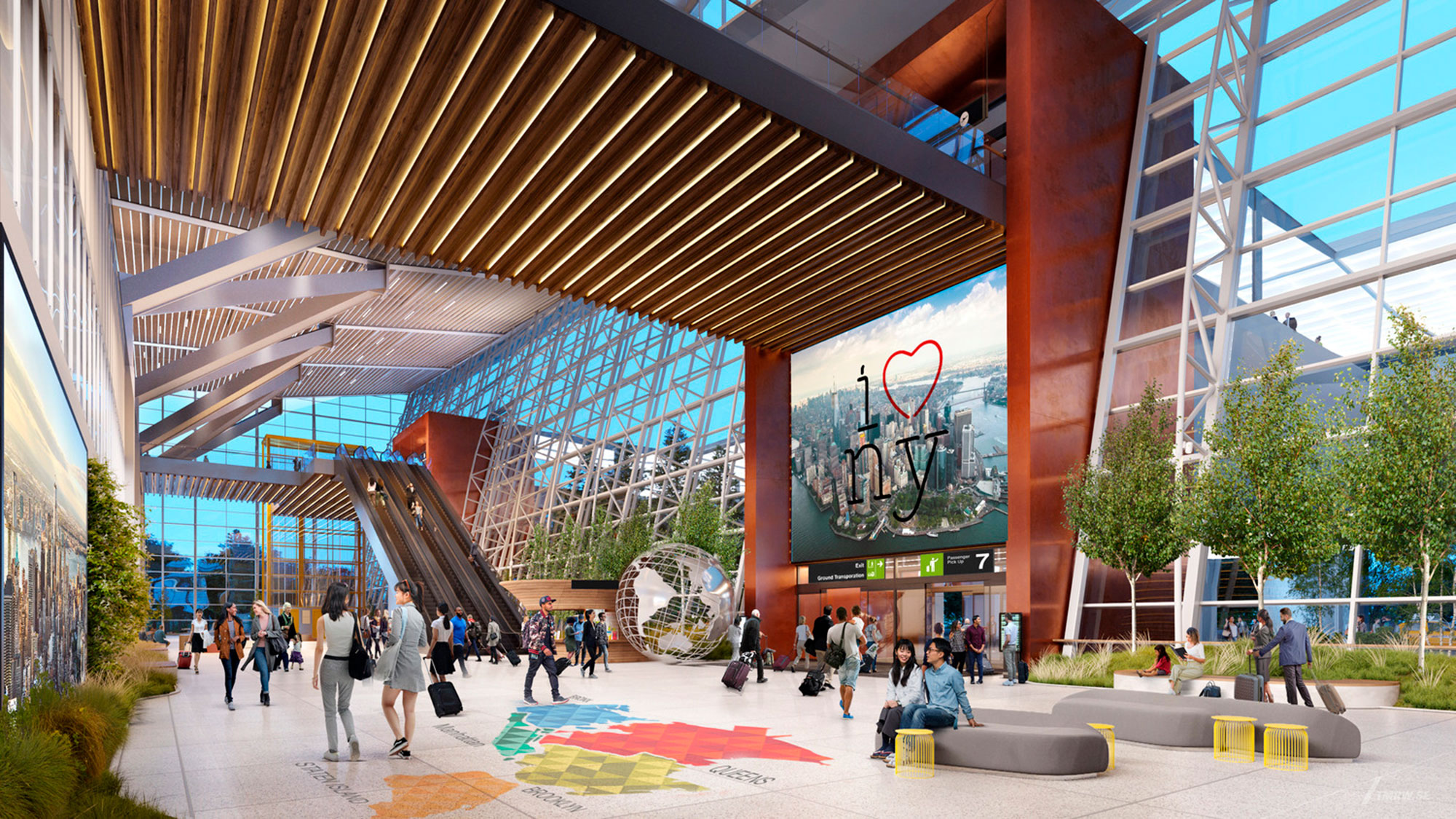
As seen at the New Terminal One at JFK International Airport, the recompose “overlook” transports passengers to a metaphorical New York City park, offering views of the 300,000 square feet of dining, retail, and recreational space below. Reminiscent of Fifth Avenue’s world-renowned shopping district, the terminal creates a modern hospitality setting, allowing it to function as an extension of the city.
While adding new shopping, restaurants, or experiential activities may not be changes an airport can make tomorrow, airports can bolster the entertainment factor in the near term through simple strategies such as pop-ups. This can include bringing in local vendors such as bakeries, breweries, or experiences specific to that region. These small moves can help an airport establish its own identity, connect to its surrounding communities, and maintain a fresh experience.
While other challenges persist, improving the customer experience at the airport is a necessary first step in ushering the industry into a new golden age of air travel. Small strategic investments in experience design yield measurable returns — from increased retail spending to improved passenger satisfaction and employee pride.
By focusing on accessible improvements in social connection, discovery, and entertainment, airports can begin to shift perceptions today, while laying the groundwork for the future.